Every rainy season, Clearwater homeowners near Island Estates or Old Bay District spot a cloud of winged insects near a porch light and wonder if it's a nuisance or a warning. Flying ants and termite swarmers get confused constantly, and the mistake matters because one costs nothing and the other can cost a roof.
Start with the waist
Look at the waist first. An ant's body pinches in sharply between the thorax and abdomen, almost like a bead on a string. A termite swarmer has no pinch at all, its body reads as one straight, thick line from head to tail. This single feature settles most cases before you check anything else.
Then look at the wings
Wings tell the same story a different way. An ant's front wings are longer than its back wings, so the pair looks uneven at rest. A termite swarmer's four wings are all one length, stretching well past the body, and they often shed those wings in a pile near a windowsill in Countryside or Skycrest.
The antennae confirm it
Check the antennae if the waist and wings still leave doubt. Ant antennae bend sharply, elbowed like a jointed arm. Termite antennae run straight, a short strand that looks beaded under a lens. None of this needs a magnifying glass built for a lab, just decent light and a still specimen on a paper towel.
What the answer means for your home
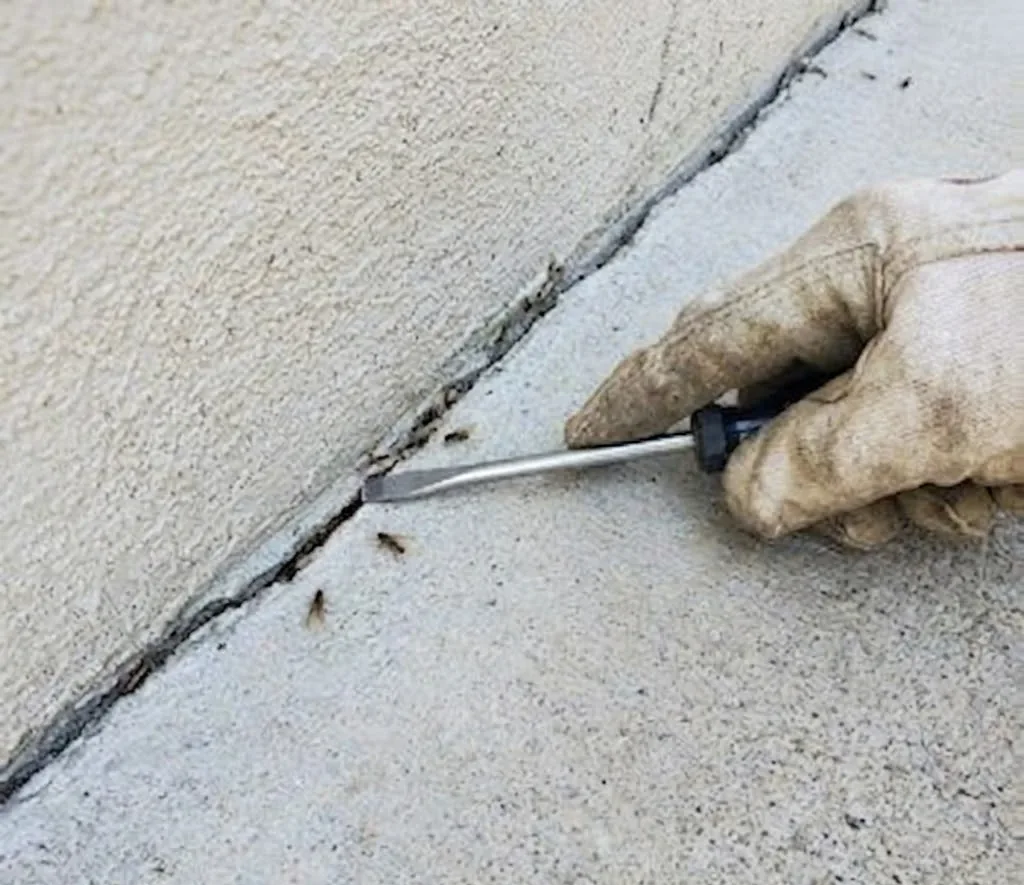
A few flying ants near Fort Harrison Avenue are usually just that, ants. A cluster of swarmers indoors, or wings piling up along a baseboard near Cleveland Street, points to a colony already active somewhere in the structure. Bag a sample instead of sweeping it up, and get it looked at before deciding it's nothing.
Dealing with this in your home?
Rainy season floods yards from Countryside to Sand Key, and pests move indoors the moment ground gets wet. If your Clearwater address keeps ending up on this list, get someone to look before signing a lease or a repair estimate. Dial (727) 558-4422 and describe what you're seeing; that's usually enough to know the next step.