Local Pest Guide
Common Household Pests
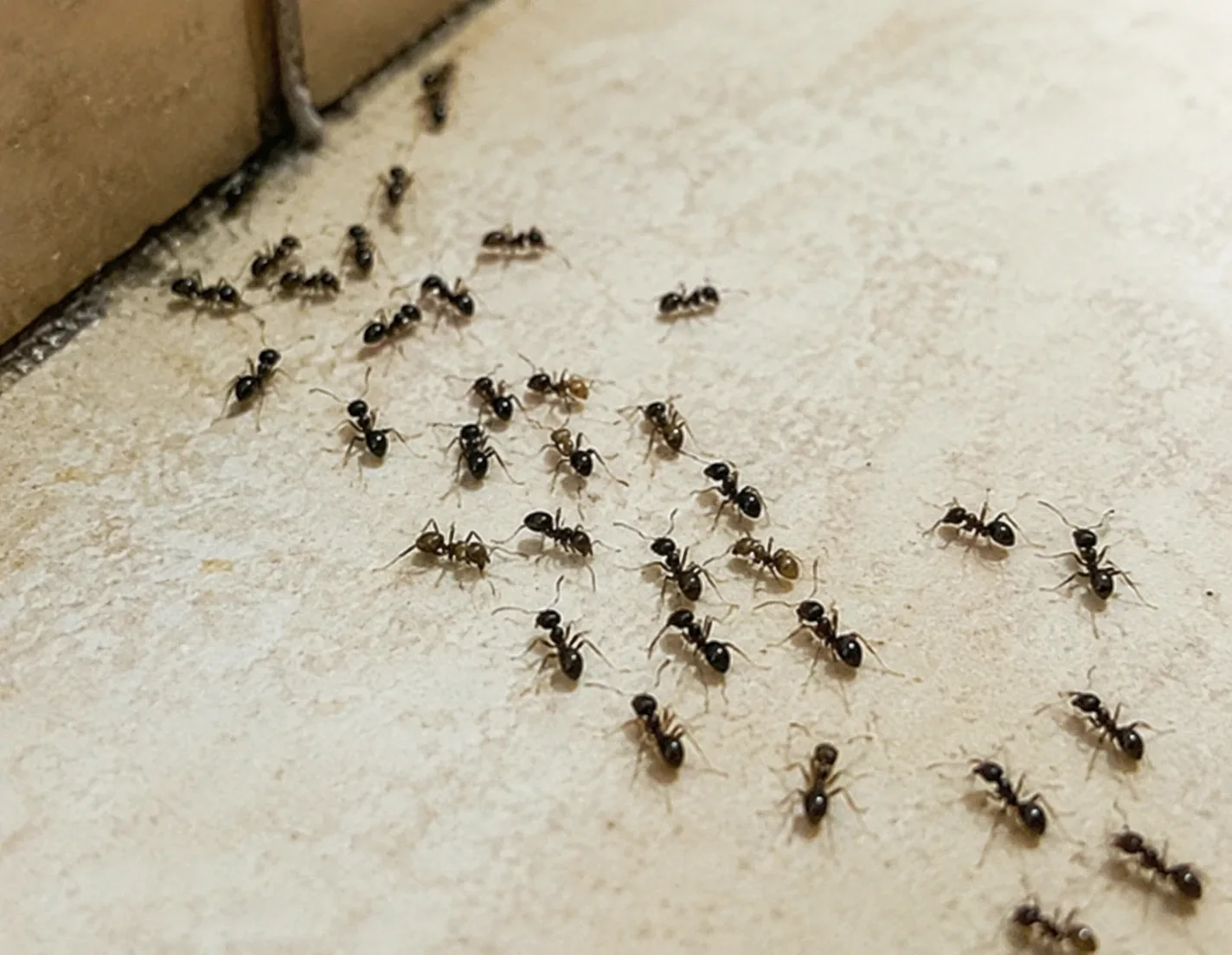
From ghost ants on the counter to termites in the soil, here are the pests Clearwater homes see most, and what each one is trying to tell you.
Read article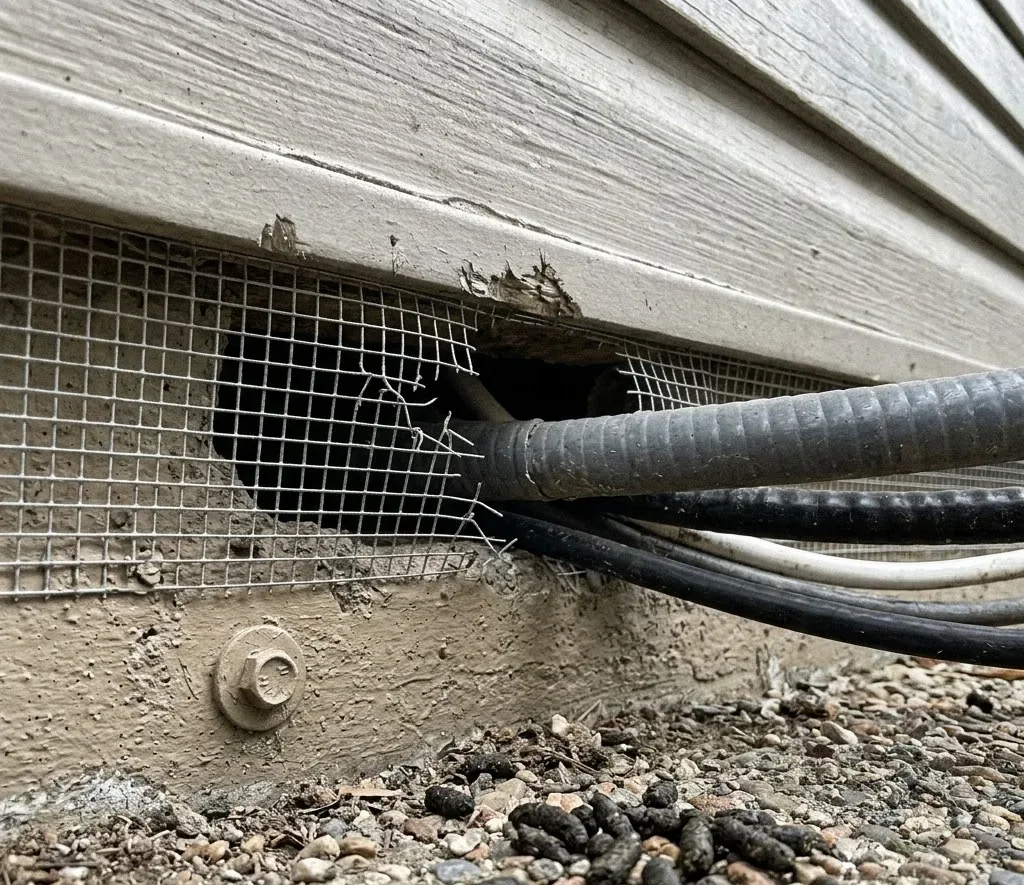
Trapping clears what's inside. Sealing the entry point stops the next one from moving in.
Clearwater's concrete-block homes look solid from the street, but roof lines, utility penetrations, and aging weep holes leave gaps a roof rat or house mouse can use to get inside. In neighborhoods like Skycrest and around Countryside, older soffits and gable vents are common weak points. Rodents don't need a hole, just a gap the width of a thumb, and once one is inside, it marks a runway for the next.
Trapping without sealing just resets the clock. Our approach pairs the two: an inspection that finds every entry point around the roofline, foundation, and utility lines, active trapping to clear what's already inside, and exclusion work with materials rodents can't chew through, so the gap that let them in stops letting anything in again.
Rodent Exclusion in Clearwater, FL isn't one-size-fits-all, whether you're in Downtown Clearwater, Clearwater Beach, Countryside, or elsewhere around Clearwater, we tailor the treatment to your property and the way roof rats behave here. That local focus is what separates a lasting fix from a temporary one.
This is most often a home job — residential pest control explains how we handle houses, or use commercial pest control if the property is a business or rental.
Small, dark, rice-shaped droppings along baseboards, in cabinets, or near the garage are usually the first sign a rodent has gotten past the exterior and is already inside.
Scratching or scurrying overhead after dark, especially near the soffit or attic access, points to roof rats using the roofline as their main entry point rather than the foundation.
Gnawed corners on stored food, chewed cardboard, or shredded insulation near a wall gap show nesting activity that keeps expanding until the entry point gets sealed.
We inspect the roofline, soffits, foundation gaps, and utility penetrations, the actual entry points rodents use on Clearwater's block homes, and map what needs sealing.
Trap placement along active runways clears the current population and confirms which rodent, mouse or roof rat, we're dealing with before sealing begins.
We seal every confirmed entry point with steel mesh, hardware cloth, and sealants rodents can't gnaw through, closing the gaps that let the last one in.
We flag food and harborage sources, pet food storage, fruit trees, clutter near the foundation, that keep drawing rodents back if left unaddressed after sealing.
Concrete block resists a lot, but it doesn't resist gaps at the roofline, dryer vents, and pipe penetrations, especially on older homes near Skycrest or Downtown Clearwater's mixed masonry stock. Skip the sealing and the next rat or mouse just moves into the same vacancy the last one left.
Florida law (s. 83.51, F.S.) requires landlords to make reasonable provisions for extermination of rats and mice in rental units, and to abate rent if tenants must vacate for the work. Our exclusion documentation gives owners a clear record of what was sealed and why.
Pest control work in Clearwater is performed under Florida's Chapter 482 licensing through FDACS, not a local trade license. Where bait stations are used outdoors, they're tamper-resistant and placed by a technician certified in that category, per state label law.
What Rodent Exclusion runs near Old Bay District or Island Estates shifts with the size of the lot and how long the issue sat before anyone called.
| No long contracts | Straight answers | Neighborhood-ready |
|---|---|---|
| Wildlife Exclusion | Pest control for Clearwater homes from Island Estates to Countryside | an estimated $160–$525 |
| Attic and soffit | Pest Control From Sand Key To Countryside, Year-Round | an estimated $190–$750 |
| One-time repair | Pest Pressure Along Clearwater Beach, Sand Key and the Intracoastal Waterway | an estimated $285–$1200 |
| Best for raccoons squirrels | Pest Pressure Near Clearwater Harbor From Downtown To Sand Key | an estimated $455–$1995 |
Book it while numbers stay small and Clearwater's rainy season hasn't fed the problem. Wait through a wet spell off Old Tampa Bay and costs rise. See what drives the total and where insurance stands on damage.
Traps and bait clear what's inside right now, but if the entry point stays open, the next rodent finds it within weeks. Exclusion is the part that makes the result last, and it's the step most homeowners skip until they've called twice.
We lean on trapping and sealing over interior bait, since a rodent that dies inside a wall void is its own problem. When bait is used, it's in secured outdoor stations, never loose pellets inside the structure.
Active trapping usually clears a typical population in one to three weeks. Sealing happens alongside the trapping, not after, so entry points close while the population inside is still being knocked down.
A quarter-inch gap is enough for a mouse, and rats need only about half an inch. Older concrete-block homes in Skycrest often have gaps around utility lines and vent screens that size, which is why exclusion checks every penetration, not just doors.
Done right, with steel mesh and hardware cloth instead of foam or caulk alone, yes. Rodents gnaw through soft materials easily; they can't chew through properly installed metal at a vent or utility gap.
Yes. Rat exclusion uses heavier mesh and larger sealing materials at rooflines and vents, while mouse work focuses on smaller gaps at slab level and utility entries. The inspection tells us which one you have before any sealing starts.
Homeowners near Sand Key or Clearwater Beach sometimes ask if a general pest plan covers what a termite-specific contract does. It usually doesn't. General plans target roaches, ants, and the palmetto bug you'll spot in a garage. Termite coverage is its own inspection and treatment track, priced and scheduled separately for a reason.
Notes on identifying what's actually in your Island Estates or Skycrest home
From ghost ants on the counter to termites in the soil, here are the pests Clearwater homes see most, and what each one is trying to tell you.
Read article
Monthly, quarterly, or one-time. How pest schedules should actually be built around a Clearwater property, not a generic calendar.
Read articleThis one gets treated the same as everything else here: looked at first, priced in writing second. The pros we connect you with will explain what they found on your property and why that treatment fits it, whether the issue traces back to standing water after a rainy-season downpour or an opening along the soffit. No pressure to sign anything on the spot. You get the figure and decide on your own time.
Call (727) 558-4422