Brown, ragged patches spreading across the lawn fast
Ragged, brown patches spreading across the lawn mean caterpillars are actively chewing grass blades down to the stem. Check thatch in the damaged area for confirmation before treatment.
Most active rainy season, June through September, in warm humid weather
Sod webworms are lawn moth caterpillars that chew grass blades down to the stem, leaving ragged brown patches that spread across a Clearwater yard, especially in rainy season from June through September. You'll spot adult moths flying low in a zigzag at dusk. Treatment targets the caterpillar stage directly in the thatch, and a follow-up often catches a second hatch.
What shows on Fort Harrison Avenue block homes before anything crawls
Ragged, brown patches spreading across the lawn mean caterpillars are actively chewing grass blades down to the stem. Check thatch in the damaged area for confirmation before treatment.
Moths flying low over the grass at dusk in a bouncing zigzag signal an active egg-laying cycle. More eggs mean more larvae coming, so this is the moment to act before patches widen.
Small green-brown caterpillars found curled in the thatch when you pull back damaged grass confirm sod webworms, not chinch bugs or drought. This identifies the pest before any treatment decision.
Birds pecking repeatedly at one lawn area, especially early morning, often means they've found caterpillars near the surface. It's a free early warning worth checking before damage spreads.
Patches that keep expanding despite regular watering point to feeding damage, not drought stress. Watering won't reverse it once caterpillars are established across a wide area.
Clearwater's warm, humid climate keeps sod webworm moths active most of the year instead of dying off in a hard freeze like they would farther north. That means new egg-laying cycles keep starting on St. Augustine and Bermuda lawns around Island Estates and Countryside almost continuously.
Rainy season from June through September pushes grass into fast, soft growth that webworm caterpillars feed on heavily. Combined with irrigation systems keeping lawns green through dry spells, yards across Clearwater rarely get the natural stress break that would slow an infestation down.
Termite pressure in Pinellas County comes from more than one direction, and a slab foundation doesn't rule it out. Homes near Old Tampa Bay and further inland toward Countryside both see activity worth a look. A local inspection beats a guess, and it's the difference between a repair now and a bigger one later.
Chinch bugs, drought stress. Sod webworm damage looks a lot like chinch bug or drought stress at first: grass yellows, then browns in patches. The tell is at night — webworm moths fly low over the lawn at dusk in a bouncing zigzag, and pulling back the thatch reveals small green-brown caterpillars, not the tiny black-and-white chinch bugs hiding at the soil line.
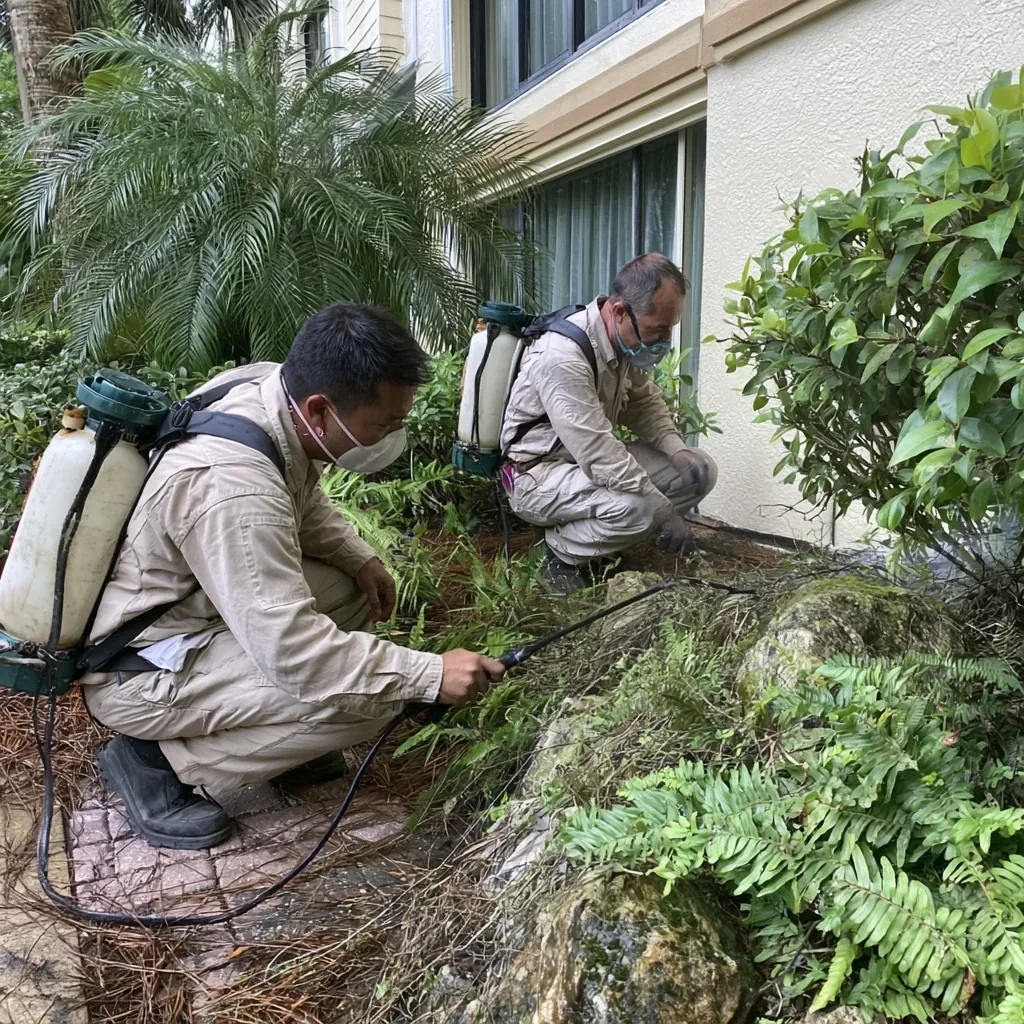
The licensed pros we connect you with identify the caterpillar stage first, since sod webworms feed at night and hide in thatch by day. Treatment targets active larvae with products timed to the infestation, applied when caterpillars are actively chewing blades rather than after damage is already done.
Because moths keep laying new eggs through rainy season, one pass often isn't enough. A follow-up inspection checks whether new larvae hatched, and lawns bordering St. Petersburg-style dense turf grass in Clearwater neighborhoods sometimes need a second round before the brown patches stop spreading.
Standing water after a rainy-season downpour near Alligator Creek or the Pinellas Trail draws mosquitoes fast, and slab homes from Skycrest to Countryside give ants and roaches a dozen quiet entry points at grade. Soffits and attics matter too, since that's how squirrels and raccoons get into a Clearwater roofline. A quick inspection usually settles what's actually happening.
| What's Going On | Storm Season Factor |
|---|---|
| One trouble spot, not a spreading pattern | Ongoing seasonal plan |
| One fix that never quite finished the job | Year-round protection |
| A colony already settled under the slab or roofline | Stops today's problem and tomorrow's |
Cutting the lawn shorter for a week and watering deeply in the evening can flush webworm caterpillars out of the thatch so birds pick them off, and it slows feeding some. But a real infestation across a Clearwater or Countryside yard usually outruns mowing and watering alone. If brown patches keep spreading through rainy season, the caterpillars are already past what lawn care fixes on its own, and a targeted treatment is the next step.
Sod webworms don't bite people or pets and don't carry disease. The risk is to the lawn, not your health. The moths themselves are harmless too, just annoying when they flutter up in a zigzag pattern as you walk across the grass near dusk. The real cost shows up as dead turf that has to be reseeded or resodded, which adds up faster than most Clearwater homeowners expect once patches spread.
Skip the guessing. The licensed pros we connect you with can look at the actual job near Sand Key or Countryside and quote it straight.Clearwater inspections are free, and technicians write the number down before touching anything, whether the job is Skycrest ants or a Harbor Oaks roach problem. No verbal estimate you have to remember. See the price bands and what changes them on the /cost page. pricing guide, and the service that handles this is Yard & Lawn Pest Control.
Identification & Treatment. Eastern subterranean termites are pale, soft-bodied insects that live underground in Pinellas County soil and enter a house through mud tubes built across a slab edge or foundation wall.
Identification & Treatment. Roof rats in Clearwater are the tree-climbing rat you'll hear before you see — scratching in the attic at night, droppings the size of rice grains near soffits, and gnaw marks on wiring.
Identification & Treatment. White-footed ants are small, dark ants, roughly an eighth of an inch, with pale yellowish feet that stand out against the darker body.
Look for brown, ragged patches in the lawn and moths flying low in a bouncing zigzag pattern at dusk. Pull back the thatch in a damaged spot — small green-brown caterpillars curled up there confirm sod webworms rather than chinch bugs or drought stress.
Sod webworm moths and larvae stay active nearly year-round in Clearwater's mild climate, but damage peaks during rainy season, June through September, when soft new grass growth gives caterpillars the most to feed on across area lawns.
No. Sod webworms feed only on grass blades and don't bite people, pets, or damage structures. The concern is a dying lawn, not anything that gets inside a Clearwater home the way roof rats or ants do.
Not usually on their own. Once patches are spreading across the yard, the caterpillars are typically past what mowing and watering can reverse, and a targeted treatment during rainy season stops the damage before reseeding becomes the only fix.
Tell us what's moving near Old Bay District or Skycrest. We'll say what it likely is and what solving it takes, before you owe a cent.
Call (727) 558-4422