Rain, tide, and heat set the stage
This roach lives outdoors year-round in leaf litter, mulch, and loose bark, and Clearwater's climate never gives it a reason to leave. It breeds in the moist organic debris under shrubs and palms rather than seeking shelter indoors, so a yard with dense landscaping near Morningside or Skycrest supports a steady population without any house involved.
Getting inside is rare and usually happens at night, when an adult flies toward a porch light near a door left open along Fort Harrison Avenue or a similar lit entry. It lands, wanders in over the threshold, and typically dies within a day or two indoors since the house offers none of the moist debris it needs to survive.
Termite pressure in Pinellas County comes from more than one direction, and a slab foundation doesn't rule it out. Homes near Old Tampa Bay and further inland toward Countryside both see activity worth a look. A local inspection beats a guess, and it's the difference between a repair now and a bigger one later.
What Clearwater Homeowners Notice First
- Size
- About 1 inch, broad and flattened, wings covering the abdomen
- Color
- Dark brown with pale, cream-colored blotches across the wings
- Flight
- Strong fliers at dusk, unlike the American cockroach indoors
- Smell
- A musty odor when several are crushed or disturbed at once
- Found outdoors in
- Tree bark, mulch beds, palmetto clumps, woodpiles near the slab
- Rain Trigger
- Most active outdoors March through June, drawn inside during warm evening flights
- Going rate
- an estimated $99–$289
What Looks Similar Near Clearwater Harbor
American cockroach. The American cockroach, also called a palmetto bug locally, is reddish-brown and shinier, breeds indoors in humid spots, and turns up in kitchens and bathrooms rather than mulch beds. The Florida woods cockroach is darker, duller, almost black with pale wing edges, and stays outdoors in leaf litter and under bark, only wandering in by accident near a lit doorway.
Where the Pros Actually Start Looking
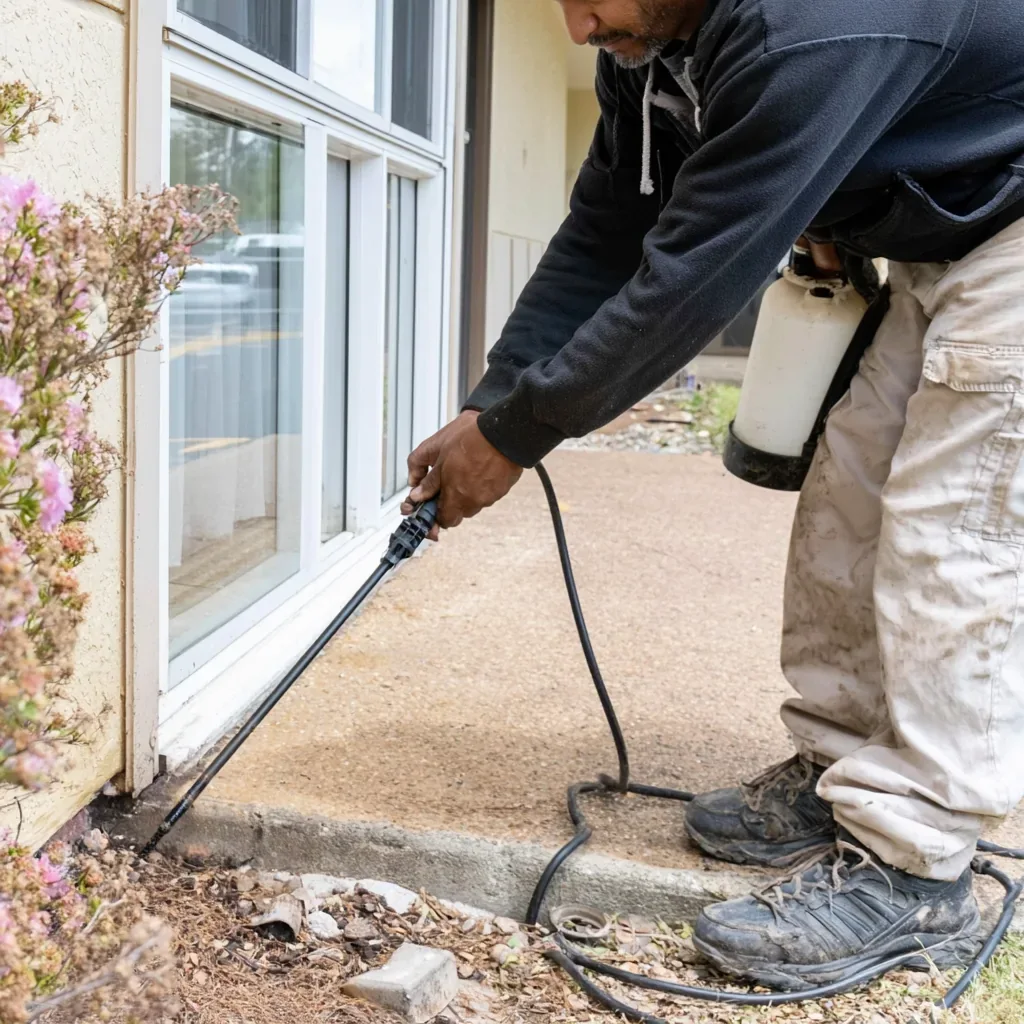
The inspection walks the exterior first: mulch beds, leaf litter under palms, woodpiles, and the gap under a garage door before it ever gets to what's inside. A tech notes soffit vent condition and pipe penetrations along the slab edge, since those are the openings this roach actually uses to get from the yard into a Clearwater house.
Outdoor perimeter treatment matters more here than indoor spraying, since this roach lives in landscaping, not in the walls. Granular or liquid product goes down in mulch beds, along the foundation line, and into harborage areas near shrubs. Indoor product is limited to entry points, since a full indoor infestation is uncommon for this species.
Standing water after a rainy-season downpour near Alligator Creek or the Pinellas Trail draws mosquitoes fast, and slab homes from Skycrest to Countryside give ants and roaches a dozen quiet entry points at grade. Soffits and attics matter too, since that's how squirrels and raccoons get into a Clearwater roofline. A quick inspection usually settles what's actually happening.
PICKING BETWEEN A SINGLE VISIT AND YEAR-ROUND SERVICE
| Next Move |
What Fits Here |
|---|
| A single visit fixes it, no follow-up needed | Year-round pest watch |
| Same bug back before the last invoice fades | Set schedule visits |
| Damage found only after cutting into a wall | Kill the pest, block the path |
Small Steps Around A Clearwater Home That Help
Cut down what draws them to a house first. Keep mulch beds pulled back from the foundation along the slab edge, clear wet leaf litter from under shrubs, and stack firewood off the ground away from the wall. Screen soffit vents and seal gaps around pipe penetrations. None of this eliminates an existing population indoors, but it removes the outdoor harborage feeding activity near Island Estates and Harbor Oaks yards where dense landscaping sits close to the house.
How This Actually Affects Your House
This roach carries no sting and poses no meaningful bite risk to a person handling one. The concern is what a large, winged insect flying at a porch light does to a household's tolerance for staying outside after dark near Sand Key or Clearwater Beach. Secondhand contact with surfaces they cross can matter for someone with asthma or an allergy, but the driver of most calls is simply the size and the flight, not an illness link.
What a Clearwater visit costs
A number on a page can't see your soffits or your slab. Get a figure that fits your house, not a stranger's in Island Estates.Clearwater inspections are free, and technicians write the number down before touching anything, whether the job is Skycrest ants or a Harbor Oaks roach problem. No verbal estimate you have to remember. See the price bands and what changes them on the /cost page. pricing guide, and the service that handles this is General Pest Control.