The slab and soffit angle nobody mentions
Clearwater's sandy soil drains fast but stays warm year-round, and that combination suits a termite that forages aggressively rather than waiting out cold weather most of the year the way northern colonies do. There is no winter die-off here, so foraging parties keep working through months that would slow a colony farther north.
Older sections of Clearwater, including homes near Skycrest and Morningside, sit close to mature landscaping and irrigation lines that keep soil consistently moist against the slab. That moisture is exactly what a foraging colony looks for when it searches for a path from the yard into framing it cannot reach through dry ground.
Attics and soffits, not crawlspaces, are where raccoons and squirrels get in around Clearwater, especially on older rooflines near Skycrest or Morningside. A torn soffit vent is a small repair until something moves in behind it. The licensed pros we connect you with check the roofline before they check anything else.
Telling This One From Look-Alikes
- Swarmer size
- About 1/2 inch including the wings, larger than native termites
- Color
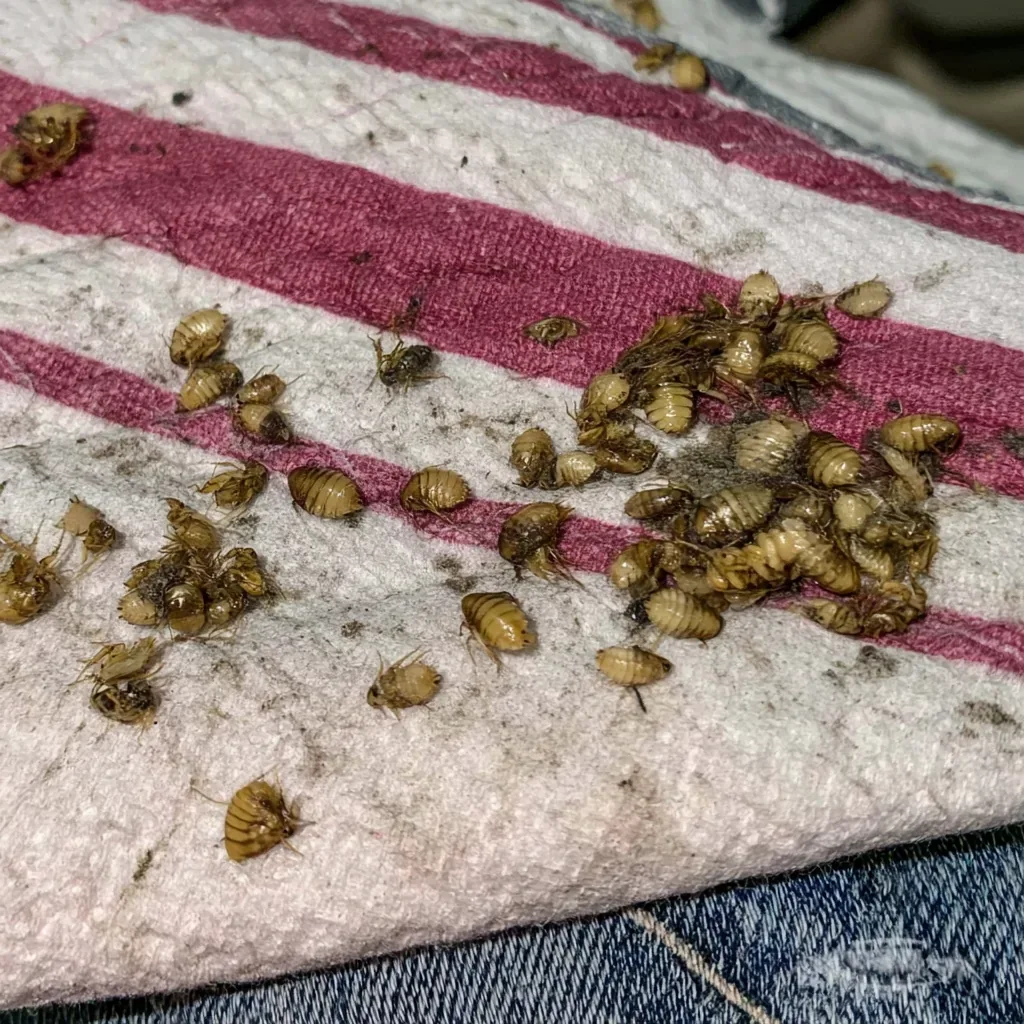
- Pale yellowish brown body with translucent, faintly hairy wings
- Nest sign
- Mud-like carton nests packed into wall voids or attics
- Mud tubes
- Pencil-thick tubes running up piers, slabs, or exterior walls
- Active year-round, aggressive colony expansion
- Foraging widens after rainy-season and dusk swarms
- Rain Trigger
- Active year-round, with spring swarms concentrated on warm evenings after rain
- Going rate
- an estimated $449–$1400
Two Pests Clearwater Homeowners Mix Up
Native subterranean termites. People mix this up with the native Eastern subterranean termite, and the two look almost the same to an untrained eye: pale, soft-bodied, swarming on warm evenings. The difference is scale and speed. A Formosan colony builds faster, forages farther from its nest, and sometimes constructs carton nests of chewed wood and soil inside a wall, something the native species rarely does.
Matching the Fix to Pinellas County Conditions
An inspection starts at the slab edge, since that is where mud tubes climb from the soil into the wall void. The pros look at expansion joints, plumbing penetrations, and any spot where wood touches ground or concrete, because a colony this size needs almost no gap to move a foraging party from the yard into the framing.
Once entry points are mapped, bait stations go into the soil around the perimeter, and a liquid termiticide is applied along the foundation where tubes were found. Because a colony can number in the hundreds of thousands, the goal is a slow spread of active ingredient back through the colony's own tunnels, not a one-time kill at the surface.
Standing water after a rainy-season downpour near Alligator Creek or the Pinellas Trail draws mosquitoes fast, and slab homes from Skycrest to Countryside give ants and roaches a dozen quiet entry points at grade. Soffits and attics matter too, since that's how squirrels and raccoons get into a Clearwater roofline. A quick inspection usually settles what's actually happening.
SIGNS YOUR CLEARWATER HOME NEEDS THE ONGOING PLAN
| What's Going On |
Storm Season Factor |
|---|
| One trouble spot, not a spreading pattern | Ongoing seasonal plan |
| One fix that never quite finished the job | Year-round protection |
| A colony already settled under the slab or roofline | Stops today's problem and tomorrow's |
Chores That Pay Off Before You Pick Up The Phone
Not much here helps once these are established. Store firewood away from the house, keep mulch off the siding, and fix leaks near the slab edge so soil under the foundation stays drier. That removes some invitation. But a colony this size does not respond to spray from a hardware store shelf, and treating only what you can see around a Clearwater home leaves the larger structure connected underground untouched.
The Question Under the Question
Formosan subterranean termites don't bite or sting people, and they don't carry disease into a Clearwater home. The risk is structural, not medical. A mature colony works around the clock, and because it's far larger than a native subterranean colony, the wood loss happens faster. Left alone through a rainy season or two, damage can reach load-bearing framing, door frames, and window trim before anyone notices swelling paint or a soft spot in a wall. Anyone doing demolition or old-wood removal on a Formosan-damaged structure should watch for dust and frass, since disturbed nesting material can trigger sneezing or eye irritation in sensitive people nearby.
What a Clearwater visit costs
A number on a page can't see your soffits or your slab. Get a figure that fits your house, not a stranger's in Island Estates.Clearwater inspections are free, and technicians write the number down before touching anything, whether the job is Skycrest ants or a Harbor Oaks roach problem. No verbal estimate you have to remember. See the price bands and what changes them on the /cost page. pricing guide, and the service that handles this is Termite Inspection.